Why Renting AI Doesn't Make Sense for Small and Medium Enterprises
Your client list, your internal workflows, your proprietary processes — right now, they probably live on someone else's servers, governed by someone else's terms of service. One API deprecation notice, one pricing restructure, and the AI tools your business depends on could vanish or double in cost overnight. For small and medium enterprises, renting AI is a structural vulnerability.
Three problems keep getting worse. And none of them have to exist.
Your data isn't yours
Every time an employee pastes a contract into a cloud AI tool or runs client data through a hosted model, that information leaves your network. The risk is not hypothetical.
In March 2023, a bug in ChatGPT's Redis cache exposed other users' chat histories and the payment details of 1.2% of ChatGPT Plus subscribers. Security researchers later discovered over 225,000 sets of stolen OpenAI credentials for sale on the dark web, harvested by infostealer malware. IBM's 2025 Cost of a Data Breach report found that 13% of organizations had already experienced a breach involving AI models or applications — and 97% of them lacked proper AI access controls. Breaches caused by unauthorized "shadow AI" usage cost organizations an average of $670,000 more than other breaches.
The standard response from AI vendors is "trust us." But trust is not a security architecture, and SMEs rarely have the legal leverage to hold a cloud provider accountable when things go wrong.
You no longer need to make that trade-off. Open-source models running locally now match or exceed their proprietary counterparts on rigorous benchmarks. DeepSeek-R1 scores 97.3% on MATH-500, compared to GPT-4o's 74.6%. Meta's Llama 4 Maverick beats GPT-4o on MMMU (73.4% vs 69.1%), MathVista (73.7% vs 63.8%), and LiveCodeBench (43.4% vs 32.3%). These models run entirely on hardware you control. No data leaves your building.
Protecting your clients' private information is worth infinitely more than a fraction of a percentage point on some arcane benchmark leaderboard.
The environmental invoice
The environmental cost of centralized AI infrastructure lands on everyone's doorstep, including yours.
The International Energy Agency projects data center electricity consumption will more than double to 945 TWh by 2030, consuming roughly 3% of the world's electricity. A Cornell study published in Nature Sustainability (November 2025) estimates that AI growth alone could produce 24 to 44 million metric tons of CO2 annually by 2030 — the equivalent of adding five to ten million cars to American roads.
Then there's water. Google's own sustainability disclosures reveal it consumed over 5 billion gallons of water across its data centers in 2023, with 31% drawn from watersheds already classified as medium or high water scarcity. In drought-stricken Aragon, Spain, Amazon requested a 48% increase in water permits for its three data centers — while the region was simultaneously applying for EU drought relief.
These data centers are also driving up electricity costs for nearby residents. Virginia's Joint Legislative Audit and Review Commission projects residential electricity bills could rise by $40 per month by 2040 due to data center demand. In Hillsboro, Oregon, where 15 major data centers operate, residential rates climbed 8 cents per kWh over the past decade — while large commercial users saw only a 2-cent increase. Across the PJM grid region, data center demand added an estimated $9.3 billion to capacity market costs.
And what do communities get in return? The U.S. Chamber of Commerce reports that a typical large data center employs just 157 permanent staff after construction. In Virginia, creating one permanent data center job required $54 million in investment — 168 times more than the average for other industries.
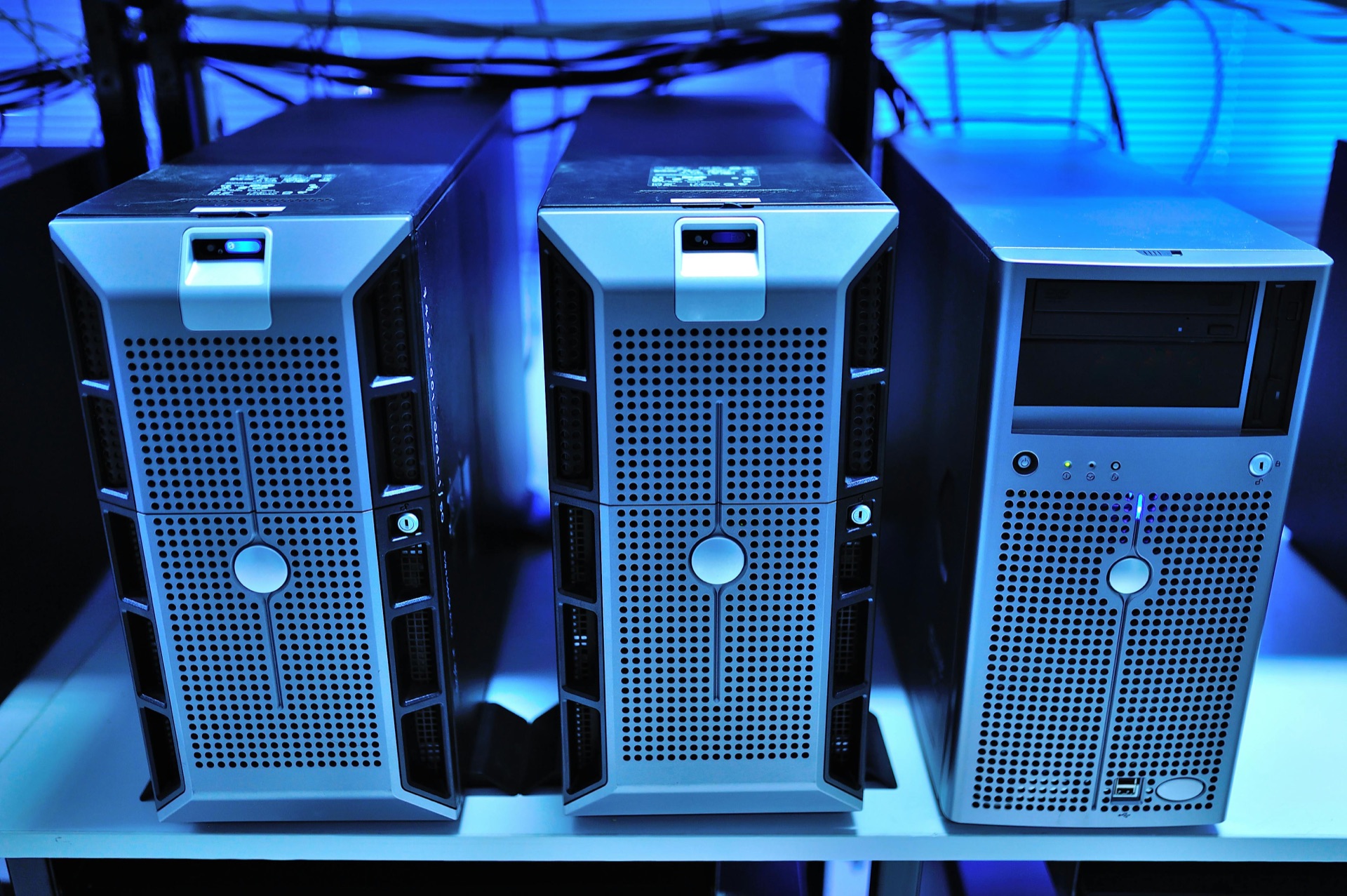
Now consider the alternative. A server with eight NVIDIA RTX PRO 6000 Blackwell GPUs (600W TDP each) consumes roughly 40 kWh during a typical eight-hour workday while providing AI coding and reasoning services to 32 to 128 users. For perspective, a mid-range electric vehicle holds about 70 kWh in its battery. Your office AI server uses less energy in a full working day than a single EV charge. Now imagine if every electric vehicle in the world had to charge from one location. That is the unsustainability phenomenon we are witnessing around AI mega-data-centers.
Distributing AI workloads to local hardware is an environmental measure as much as a privacy one. Research shows that edge and distributed computing architectures reduce energy consumption by 75 to 80% compared to routing everything through centralized facilities.
The enshittification spiral
In 2022, writer Cory Doctorow coined the term "enshittification" to describe how platforms attract users with great service, then systematically degrade that service to extract maximum profit. The American Dialect Society named it 2023's Word of the Year. It is now the defining pattern of cloud AI.
Watch how it works. OpenAI released GPT-4.5, deprecated it, then brought it back exclusively for $200-per-month Pro subscribers. Google deprecated Gemini 3 Pro Preview with six days' notice — falling short of its own stated two-week minimum. OpenAI's entire Assistants API is being retired, with migration required by August 2026. If your product was built on it, you have a deadline and a rewrite ahead.
This is the business model working as intended.
The top five cloud infrastructure providers control 82.1% of the global IaaS market (Gartner, 2024). Your choice of AI landlord is hardly a choice at all. And when a vendor collapses, the costs are brutal: after Builder.ai shut down, NexGen Manufacturing spent $315,000 migrating just 40 AI workflows to a new platform.
When AI runs on your hardware, none of this applies. No vendor can deprecate your local model. No terms-of-service update can strip your rights to your own data overnight. Your proprietary workflows, client relationships, and institutional knowledge remain yours: encoded in models you own, fine-tuned on data you control, running on equipment in your office or data center.
Instead of funneling capital toward a handful of infrastructure monopolies, hardware investments circulate among regional vendors and technicians. You own the tool instead of renting the toll road.
AI doesn't have to work this way
Privacy exposure, environmental damage, and vendor dependency are not inherent to artificial intelligence. They are artifacts of a centralized, rent-seeking business model. Local AI, running on hardware you own, solves each of them.