The Corner Store Is the Hardest Customer in AI, and That Is the Point
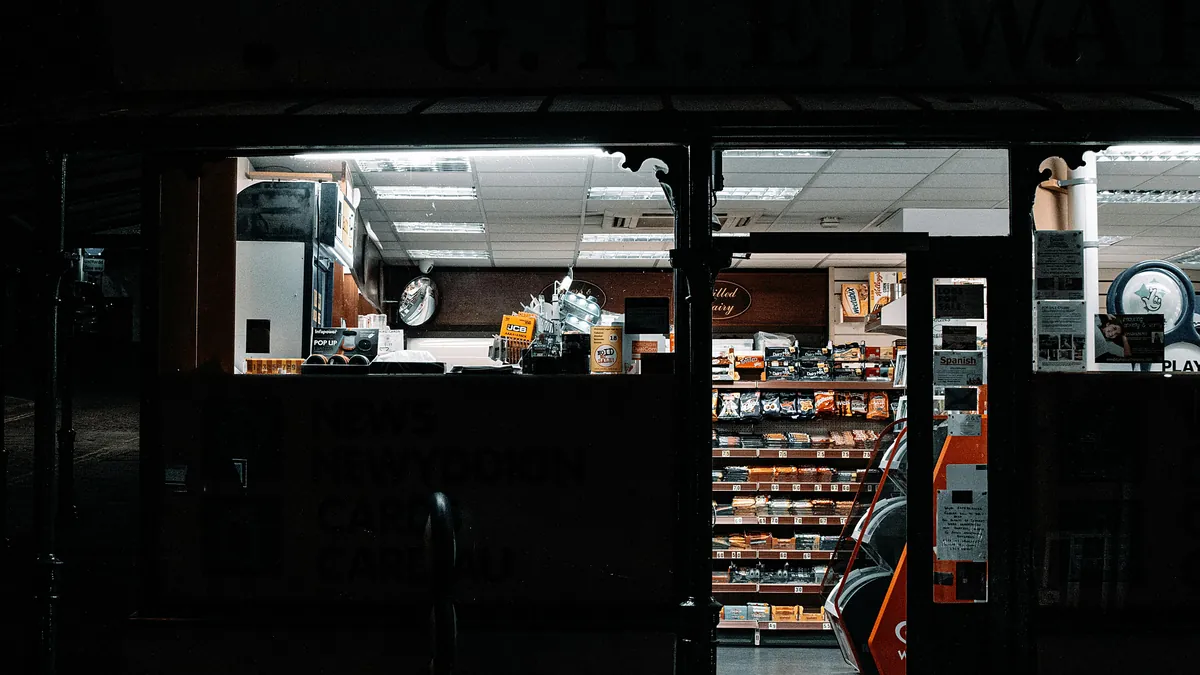
When I left research to build this company, the advice I got most often was to sell to chains. Bigger contracts, one procurement process, a security review you can reuse. The corner store was described to me the way it usually is: too small to pay, too busy to learn, too fragmented to reach.
I went the other way. I think the corner store is the most useful customer an AI company can have. Not the easiest. The most useful.
Most of the economy is very small
The SBA's Office of Advocacy counts 36.2 million small businesses, 99.9 percent of all US firms, of which 82.3 percent — 29,811,495 — have no employees at all. Among the 6.4 million that do employ people, Census figures show 5,720,093 have fewer than 20 employees and 4,029,041 have fewer than five. In retail specifically, 90.8 percent of firms are under 20 employees; in food and beverage stores, 62.1 percent are under five.
The convenience store industry looks the same from the inside. NACS counts 151,975 US convenience stores, of which 95,672 — 63 percent — belong to companies with ten stores or fewer. In the last year the association broke the number out separately, 91,799 were single-store operators. One store. Often one family.
These are not marginal businesses. They are the ordinary American business, and they are the ones where the owner is behind the counter at seven in the morning.
The industry is not building for them
The gap shows up clearly in adoption data. The Census Bureau's business survey, summarised by the SBA, found 7.6 percent of businesses using AI in the year to August 2025 — 11.4 percent among firms with more than 250 employees, 8.2 percent among firms with fewer than five. A separate SBA research spotlight found the most common reason the smallest firms gave for having no AI plans was not cost and not privacy. Nearly 82 percent of businesses under five employees said AI was simply “not applicable” to what they do, and the report's own explanation is blunt: "AI companies may focus on designing their products for larger businesses, leading small businesses to feel AI is not relevant to them."
I read that sentence as an indictment of my industry rather than of those owners. When a nine-person grocery looks at the AI market and concludes none of it is for them, they are reading the market correctly.
Meanwhile the economics leave no room for experiments. NACS reports total industry expenses up 23.3 percent since 2021, direct store operating expenses just under $166 billion in 2025, $21.3 billion in card fees, and basket profitability down eight cents year over year — an industry, as the magazine puts it, where “basket profitability is a game of pennies”. A product that needs a pilot, a consultant and a six-month evaluation is not affordable at that scale even if the software were free.
What building for them forces you to do
Here is why I think this is the right constraint rather than a noble sacrifice. Every requirement the corner store imposes makes the product better for everyone else too.
It has to work with what they own. No capital project, no new cameras, no rewiring. That forced us onto open protocols and onto the recorder already in the back room, which is also why a larger store can deploy without a procurement cycle.
It has to cost less than the problem, visibly. $25 per camera per month, month to month, first 30 days free once a card is on file, 10 or 20 percent off if you prepay six or twelve months. An owner can do that arithmetic against one incident in their head, at the counter, in the time it takes to serve a customer.
Nobody can be trained. There is no IT person and there is no afternoon free for a webinar. The box installs itself when plugged in; instructions are typed in plain English; alerts arrive as a text message with a clip. If it needs a manual, it has failed.
It cannot be noisy. A chain can assign someone to triage false alerts. An owner cannot, and will simply turn the notifications off — which is why we put a second AI in front of every message and accept staying quiet when it is unsure.
Privacy cannot be a policy document. A small owner has no leverage over a vendor and no way to audit one. So video is not stored in the cloud: what leaves the store is text, and the clip attached to an alert expires within 24 hours. That is a property of the design, not a promise, and a large customer's security team likes it for exactly the same reason.
Each of those started as a limitation imposed by a customer who could not accommodate anything else. Together they describe a product I would rather sell to anyone.
The part that keeps me at it
A 40-camera grocery store in Massachusetts runs on this today. The owner is not an early adopter, does not use the word AI, and did not want a dashboard. What he wanted was to stop finding out about things a week late.
There are a few million businesses in roughly that position, and most of the AI industry has decided they are not the market. I think they are the market — and that the discipline of serving them is what keeps a product honest, affordable and small enough to understand.
Shobdo VideoRAG is an AI agent for the security cameras your store already owns. It writes down what it sees and texts you only when something matters. Learn more or book a conversation.