Most of the World Is Uneventful
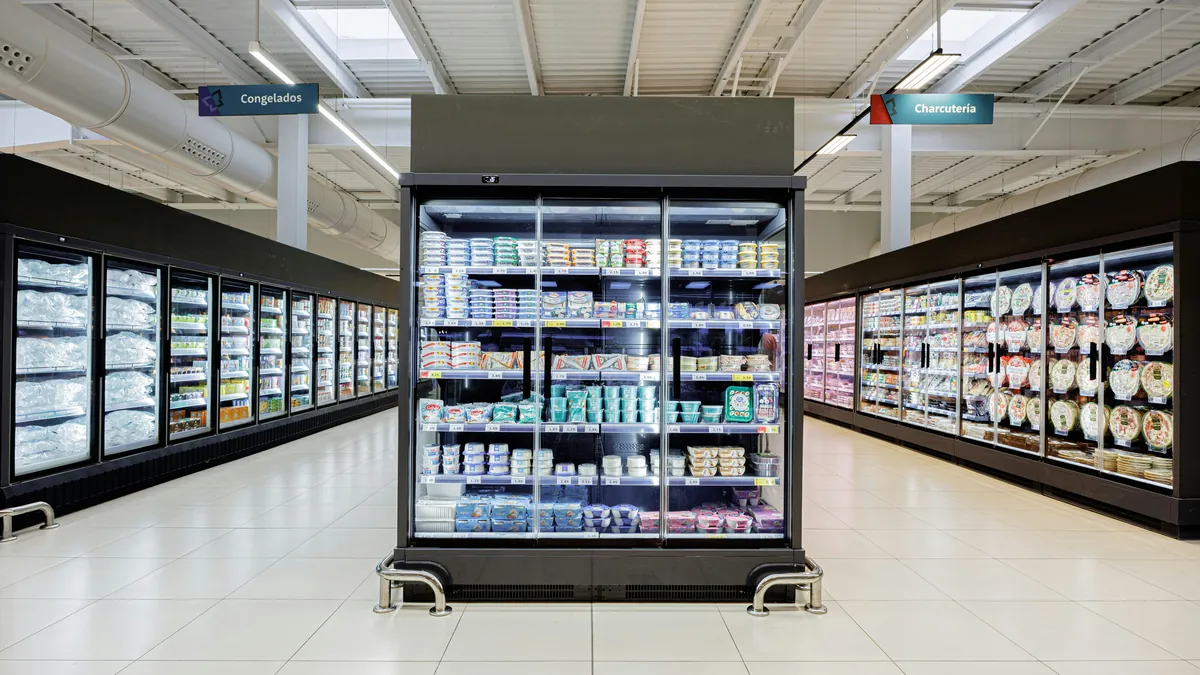
Stand in the frozen-food aisle of a grocery store at two o'clock on a Tuesday afternoon and count. On a quiet day you might see three people in forty minutes, each gone in less than a minute. The rest of the time the aisle is a photograph of itself. Now multiply that by every camera in the building, and by the hours overnight when the store is closed.
That is the first thing you learn when you point an AI at a store's cameras: the store is empty. Not always, but most of the time, from most angles. And an AI that "watches everything" spends most of its day, and most of your money, describing emptiness.
Information lives in surprise
There is a piece of mathematics behind that feeling. In 1948 Claude Shannon showed that the information in a message is measured by how unexpected it is: a symbol you could have predicted carries nothing new. A frame that looks like the last frame is a predicted symbol. It contains no information, so, in a well-designed system, it should cost nothing.
Biology got there first, and engineers have borrowed its answer. "Event cameras" are, in the words of a widely cited survey, bio-inspired sensors that, "instead of capturing images at a fixed rate", measure brightness changes at each pixel, and low power consumption is one of the advantages it lists. When nothing in front of them changes, they have nothing to send. A conventional camera cannot do that, but the software behind it can.
Two looks at two prices
So our system looks twice, with two different AIs, and the two looks cost very different amounts.
Nothing at all happens until something moves. A light motion check watches every camera continuously and asks one question: is anything happening here that was not happening a moment ago? It does not describe and it does not decide. While the aisle is a photograph of itself, nothing else runs.
The first look begins when that check says yes. We call it scene sensing: a small, fast AI looks at the stretch of movement and writes one plain-English sentence about it. A person in a grey jacket walked the length of the frozen aisle. A delivery arrived at the back door. Those sentences are the written log, the thing you search, and the thing that leads you to the right clip later. This AI is small on purpose. It handles thousands of these moments a day across every camera we watch, and the electricity for all of them costs pennies. Being honest, quick and inexpensive matters more here than being brilliant, because this is the look that happens every time anything happens.
The second look is rare and expensive, and it is meant to be. When a sentence looks serious, or matches something the owner asked to be told about, the alert check takes over: a much larger, slower AI that watches the actual clip, reasons about it, and decides whether a text should go out. It is allowed to take its time and to cost real money each time it runs, because more is at stake. A missed sentence in the log costs little, but alerts that are wrong get muted, and a muted system protects nobody. So this AI has to be careful even at the expense of speed. Alerts are also uncommon, a handful a day rather than thousands, which is why we can afford to spend real money on each one.
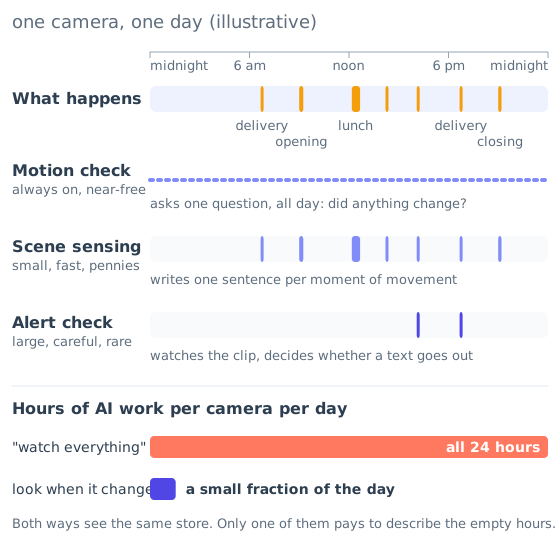
That split is what the whole price is built on. The frequent work is small and runs on pennies. The expensive work is rare. And the most common state of a store, nothing happening, costs almost nothing. In a 40-camera grocery store in Massachusetts, most cameras see nothing for most of the day. Working this way cut the cost of watching a camera by roughly ten times, compared with describing every moment. It also has a side effect we did not design for and now would not give up: quiet hours produce no data at all. Nothing is written about an empty aisle, so there is nothing to keep and nothing that could leak.
A room, a circuit breaker, and a dial turned down
The other half of the price is where the work happens. Scene sensing does nearly all of the work. It runs on graphics cards (GPUs) that we own, in a room we rent. It does not run on a cloud service with a meter running. Cloud AI is priced for the opposite of a quiet store. An MIT Lincoln Laboratory article on AI's energy use explains that AI built to answer quickly needs to "use redundant hardware, running all the time, waiting for a user to ask a question". You pay for that waiting whether or not anything happens.
Our entire AI setup runs on a single 15-amp circuit. That includes every AI that watches every camera in every store we serve. It also includes the air conditioner that keeps the room from cooking. A 15-amp circuit is what feeds an ordinary bedroom. We do not need a data centre, because most of the world is uneventful.
Owning the hardware lets us do something a cloud customer cannot: turn it down. Every graphics card accepts a limit on how much power it may draw. The same Lincoln Laboratory work found that capping power cut energy use by about 12 to 15 percent while making jobs only about 3 percent slower. The cards also ran about 30 degrees Fahrenheit cooler, which may help them last longer. That work was about training AI over days or months, where one researcher called the delay "barely noticeable". Our work is describing a moment in a store, and the AI has minutes to do it. So we run every card in low-power mode, well below the maker's default setting. A sentence about a delivery at the back door arrives a few seconds later than it could have. In return, the power bill is smaller, and the whole setup fits on that one circuit.
Put the two halves together and the price works. The small AI works only when something moves, on hardware that draws less than it was built to. The large AI works only when something might matter. That is what keeps a monthly price per camera affordable for a corner store, without a subsidy from investors that will end one day.
Low power is also a promise
We could stop at the bill. We do not, because one of the three values this company was started on is sustainability over exploitation, and this is the place where that value meets a circuit breaker.
The International Energy Agency estimates that data centres used about 415 terawatt-hours of electricity in 2024, roughly 1.5 percent of everything the world consumed, and that the figure is set to more than double by 2030. It names AI as the most important driver of that growth. Some of that power goes to the pattern described above: hardware running all the time, waiting. A camera AI built the cloud way adds to it with every store it signs.
A camera AI built our way uses far less. It draws power in proportion to how much happens in the store, on cards set to use less than they could. And video is not stored in the cloud, so no server has to hold a second copy of your footage. "Sustainability over exploitation" is an easy thing to print on a values page. Measured in watts, it turns out to be the same decision as "affordable".
Shobdo VideoRAG is an AI agent for the security cameras your store already owns. It writes down what it sees and texts you only when something matters. You can say in plain English what you want it to watch for and send alerts about. Learn more or book a conversation.