Convenience Store Security Cameras: What to Watch
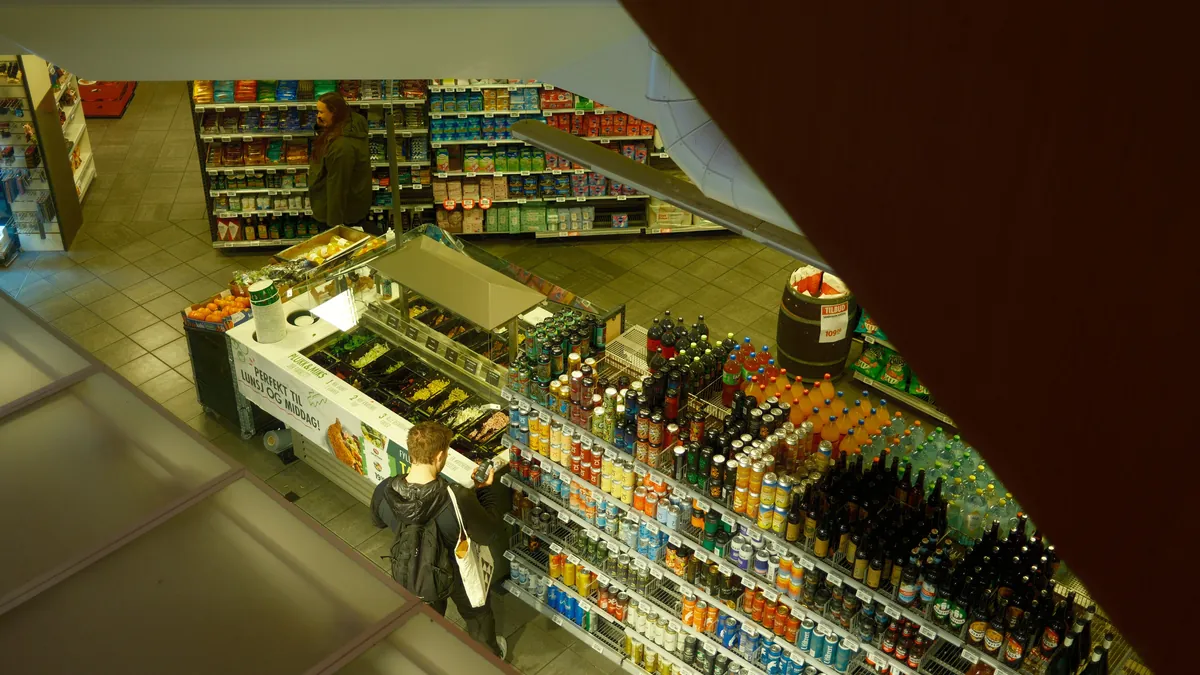
A convenience store is a few hundred square feet with more going on than most buildings its size. Cash changes hands all day. Beer sits in a cooler by the door. One person often runs the whole store after dark. So what should convenience store security cameras watch? Five places: the register, the front door, the cooler, the back door and the lot. Most stores already have a camera on most of them.
The second question matters more. Who looks? A recorder keeps about 30 days of video, and nobody opens it until something has gone wrong. That is fine for most of what cameras do. A few moments are different. Someone at the back door at 1 a.m. is worth a text while it is happening. This post goes through the five places, what the law asks of them, and which moments deserve a text instead of a recording.
Why are convenience stores a target?
Because of the cash, the hours and the solo shift. OSHA's guide for late-night retail names the risk factors plainly: the exchange of money, solo work, the sale of alcohol and poor lighting. The guide was last revised in 2009, and it is still OSHA's current advice for convenience stores, liquor stores and gas stations.
The numbers have not moved much since. The FBI estimates 13,901 robberies at convenience stores in 2024, and 7,713 more at gas stations, out of about 206,000 robberies in the country. In other words, about one robbery in ten happens at a convenience store or a gas station. Streets come first, with nearly a third. Then commercial buildings and homes. Then the convenience store. Theft is the daily version. NACS, the trade association for the industry, put the loss from theft at $1,953 per store per month by August 2023, more than double the figure from January 2020. In December 2025 it told Congress that rising crime has forced many retailers to divert significant resources to security.
Who carries that cost? Mostly small owners. There are 151,975 convenience stores in the United States, and 63% of them belong to a company with 10 stores or fewer. That owner is the one who gets the call at 1 a.m. We wrote about those owners in the corner store is the hardest customer in AI.
Where should the cameras point?
Start with the register. Every rule we found begins there. Madison, Wisconsin, requires cameras on entrances, exits, registers and pumps, a rule it passed in 2018 with a fine of $100 a day for stores that ignore it. Loomis, the cash-handling company, tells owners to put cameras inside and outside each entrance and on every register, plus the ATM and the safe. The register camera does two jobs. It records the robbery, and it records the refund that never had a customer. Our post on retail loss prevention math has the numbers on the second one.
The front door comes next. A camera that faces the door at head height gets a face on the way in. That is why Madison's rule says cameras must be positioned to catch each customer's face, and why OSHA recommends height markers on exit doors. Pair the camera with a door chime. OSHA's list includes door detectors so that workers are alerted when someone enters.
Then the cooler. Beer walks out of convenience stores in a way nothing else does, because it is heavy, it sits near the door, and it is wanted at 11 p.m. So a camera on the cooler doors sees the grab, and the register camera sees whether anyone paid.
The back door is the one most stores get wrong. It is where deliveries come in, where trash goes out, and where nobody is looking. OSHA tells owners to lock doors used for deliveries and garbage removal when not in use and to take deliveries in daylight. Loomis adds that only someone inside should be able to open the back door. A camera there watches two things: the door at night, and the delivery that comes up short.
The lot comes last. A lit lot is in the law in Florida, where a convenience business must light its parking lot to at least 2 foot-candles. A camera over the lot sees the car that pulls up to the back at 2 a.m., and the one that waits by the door with the engine running.
Most stores have all five already. Whether old cameras can do new work is the question in do you need AI security cameras, and the short answer is that the recorder you own is usually enough.
Are convenience store security cameras required by law?
In some states and cities, yes. Florida's Convenience Business Security Act asks every convenience business for a camera system "capable of recording and retrieving an image to assist in offender identification and apprehension". The same law asks for a drop safe, a lit lot and a silent alarm. It also wants a sign that the register holds $50 or less, a clear view through the front windows, height markers at the entrance and a cash policy after 11 p.m. Madison has its camera ordinance. Many places have no rule at all, and the OSHA guide is advice, not law. So check your state and your city. Florida's list is a good checklist even where nothing is required.
Now look at what every one of these rules asks the camera to do: record and retrieve, so that someone can be identified afterwards. OSHA gives the same reason, video surveillance "to increase the likelihood of identification of perpetrators". None of them asks anyone to watch.
Which moments are worth a text?
Now the five cameras split into two groups. Most of what they record is only needed later. A police officer asks for the clip, an insurer asks about the slip and fall, you check a refund. We wrote about who actually asks for your footage. The recorder handles all of that, and it needs no help.
A few moments are different, because something can still be done about them. Someone at the back door after close. A person inside the store when it should be empty. A car at the back at 2 a.m. Someone behind the counter who does not work there. For these, a text with a short clip is worth more than a recording you find on Monday.
Why not turn on the recorder's motion alerts, then? Because motion alerts on a convenience store camera fire all night. The cooler compressor shakes the picture, headlights sweep the lot, the newspaper lands at 4 a.m. Most owners turn them off within a week; we wrote about why motion alerts get turned off. The fix is to name the moment, not the motion.
That is what a watch instruction does in Shobdo VideoRAG. You write it in your own words, for one camera or the whole store: "Tell me if anyone opens the back door after 10." Or that someone is inside after you close, or that a car stops by the back door at night. The first AI writes down what every camera sees, around the clock. When something matches your instruction, a second AI pulls the clip and watches it before anyone is texted. If it cannot confirm the event on video, nobody gets a message. So a text from it means something. The thinking behind this is in watch for the thing you actually worry about.
It works with the recorder you already own: Dahua, Amcrest, Hikvision, and anything with ONVIF or RTSP. Footage stays on your recorder; video is not stored in the cloud. The only video that travels is the short clip in the text, and it expires within 24 hours. No audio is captured. The price is published: $45 a month for 3 cameras, $125 for 8 and $200 for 16, with the first 7 days free.
Now the limits. VideoRAG does not talk to the person at the door or set off a siren today, and it does not call the police for you. You see the clip and decide. Each alert already arrives as a checked clip with a written description, so handing it on to a monitoring center the owner picks fits the same design. So does setting off the store's own camera siren after the second check. A monitoring company does those things today; we compared the two in remote video monitoring costs. VideoRAG does not read plates, and it does not recognize faces, on purpose. A drive-off needs a plate reader. A robbery needs the recorder and the police.
What is better left to the recorder?
Almost everything. The table puts the five places side by side. The middle column is what the recorder already does well. The right column is the one moment at each place worth a text.
| Place | The recorder keeps | Worth a text |
|---|---|---|
| Register | Every sale, refund and void, for the day you need to check one | Someone behind the counter who is not staff |
| Front door | A face on everyone who walks in | A person inside after close |
| Cooler | The grab, and whether it was paid for | Rarely anything the door camera does not already catch |
| Back door | Deliveries and trash runs | The door opening after hours, or a car backed up to it |
| Lot | Cars, plates for the police, the slip and fall | A person or a car at the back at 2 a.m. |
A recorder keeps about 30 days. Loomis asks for a minimum of 30 days of history, and that is the common setting. The clip you need for the insurer in week five is gone unless you saved it. So pull the clip the day you learn you might need it.
The last thing is the camera nobody checks. OSHA's advice is to make checking lighting, locks and security cameras part of the daily routine. A camera that failed in March is found in June, on the day its clip is needed. A system that writes down what each camera sees notices a dark camera the same day, because the log for that camera stops.
Common questions
How many cameras does a convenience store need? Enough to cover the five places: at least one on the register, one on the front door, one on the cooler, one on the back door and one or two on the lot. Madison's rule adds every pump. A store with 8 cameras covers most of that.
Do I have to tell customers they are on camera? Loomis recommends signs inside and outside that say recording is in progress. A visible camera and a sign are part of the deterrent, because the camera's job in every rule above is identification, and a robber knows that too.
How long should I keep the footage? Thirty days is the common minimum. Requests from police and insurers arrive weeks later, so save any clip you might need on the day you learn about it.
Can I get an alert instead of watching the cameras? Yes. Write down the moments you care about, in plain words, and have each alert checked on video before it reaches you. That is what VideoRAG does, with the recorder you already have.
Shobdo VideoRAG is an AI agent for the security cameras your store already owns. It writes down what it sees and texts you only when something matters. Learn more or book a conversation.